
The Federal Reserve · 6 min read
The Fed does not set your mortgage rate
Every few weeks the news says the Fed raised or cut rates, and people call me expecting their quote to have moved the same way. Often it has not. Sometimes it moved the other way. Here is what the Fed actually controls, what follows it, and what does not.
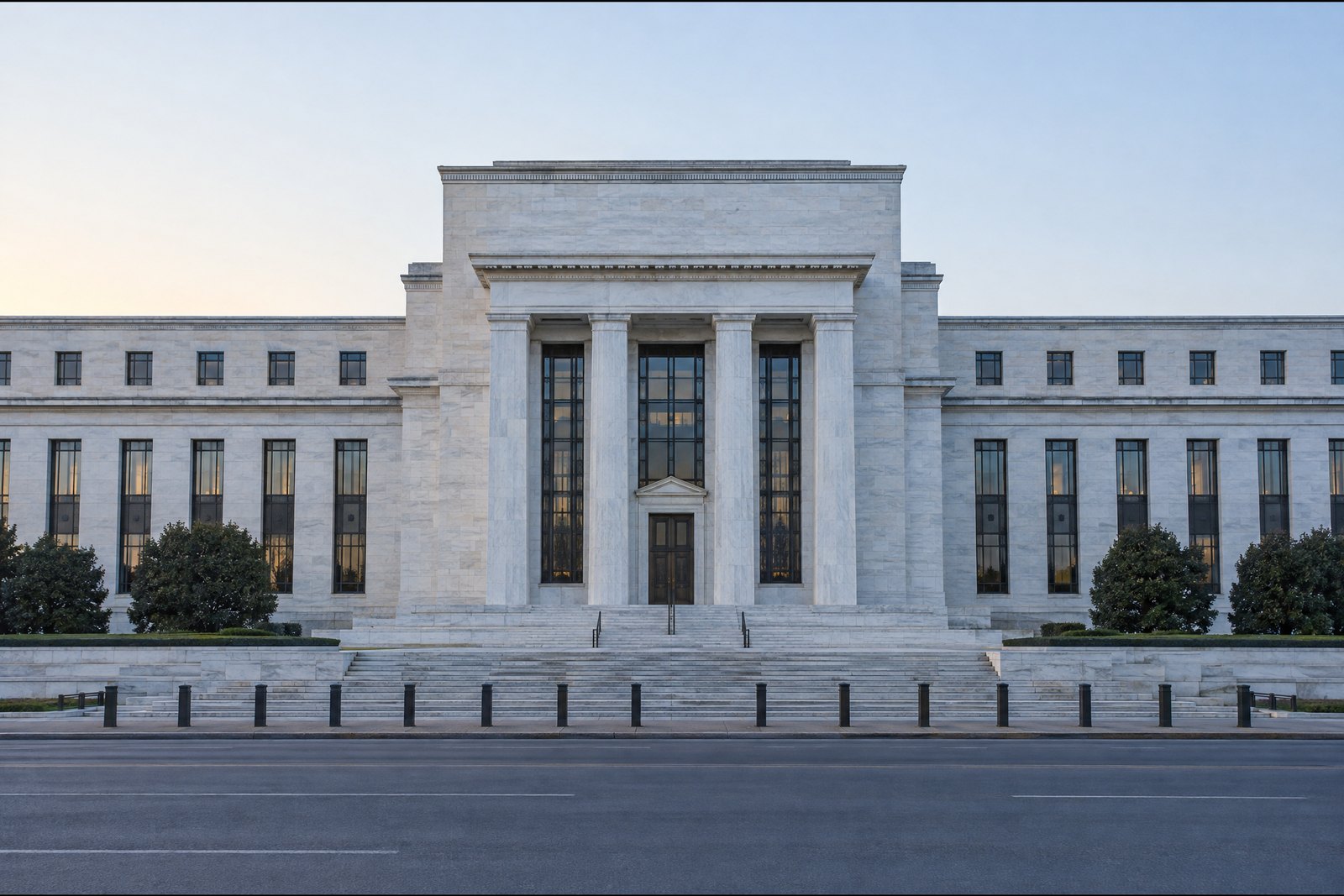
What the Fed actually sets
The Federal Reserve sets one thing: the rate at which banks lend each other money overnight. One night. It is the shortest loan in the financial system, and it is the floor under every other short loan, because a bank will not lend to you for a month at less than it could earn lending to another bank for a night.
So when the Fed moves, the loans that reprice quickly are the short ones. Credit cards, home equity lines, some car loans, business lines of credit, the interest your savings account pays. Most of those are tied to a bank’s prime rate, and prime is tied to the Fed. Within days of a meeting, those move.
A fixed mortgage is not a short loan. It is money lent for decades at a price agreed on day one. Nobody lends for decades at the overnight rate, and the Fed does not try to make them.
Why a mortgage does not listen
A fixed mortgage is priced by the people who buy it. Your loan is bundled with thousands of others and sold to investors, and what they will pay for that bundle decides the rate you are offered. Those investors are not asking what the Fed did this morning. They are asking what inflation, growth and risk look like over the years the loan will run, and the clearest single reading of that is the yield on the government’s ten-year bond.
The ten-year is set by trading, not by a committee. It moves every minute the market is open, and it moves on expectations. If investors believe the Fed will keep money tight for a long time, long yields rise. If they believe the opposite, long yields fall. The Fed influences those beliefs, but it does not dictate them, and it is far from the only voice.
That is the whole reason a mortgage can ignore a Fed meeting. The meeting changes the price of one night. The mortgage is priced on the next ten years.
The day the Fed cuts and mortgages go up
It has happened more than once in recent years, and it surprises people every time. The mechanism is simple once you see it. A Fed decision is almost never a surprise; the market has been pricing it for weeks, reading speeches and data and the Fed’s own signals. By the day of the meeting, the cut is already in the price of everything, including mortgages.
What is not in the price is what the Fed says about what comes next. If the committee cuts but sounds worried about inflation, investors conclude that money will stay tighter for longer than they had assumed. Long yields rise. Mortgage pricing follows them up, on the very afternoon the headline says rates were cut. The reverse happens too: a Fed that holds steady but sounds relaxed can send long yields down and mortgage pricing with them.
So the decision is the least interesting part of a Fed day. The statement, the press conference and the committee’s own projections are where the market finds its information, and the ten-year tells you within the hour which way it read them.
What in your house does follow the Fed
If you carry a balance on a credit card, the Fed matters to you directly and quickly. The same goes for a home equity line of credit, which usually floats with prime, and for an adjustable-rate mortgage once its fixed period ends. When the Fed cuts, those get cheaper within a billing cycle or two. When it raises, they get dearer just as fast.
This is why a household can feel a Fed move in two opposite ways at once. The equity line gets easier while the quote on a new fixed mortgage barely changes, or drifts the other way. Neither is a mistake. They are simply two different loans, listening to two different markets.
It is also why the choice between a fixed loan and a floating one is really a choice about which market you want to be exposed to. Fixed means you are done with both once you close. Floating means you are betting, knowingly or not, on where the Fed goes from here.
How to read a Fed day
Ignore the decision; it was priced last month. Read the first paragraph of the statement for the words that changed from the previous one. Listen to the press conference for how the chair describes inflation and the job market, because that is what investors are trading on. Then look at the ten-year at the close. If it fell, mortgage pricing likely improved. If it rose, the opposite, whatever the headline said.
Lenders often set their pricing in the morning and reprice in the afternoon on a Fed day. If you are in the middle of a purchase, that is the day to be reachable, not the day to be surprised.
Measure a refinance, not a headline
If pricing moves after you close, the question is never whether the Fed acted. It is whether the new loan pays for itself before you plan to move. Put your own numbers in and see.